

How to Time Your Trade Exits with Precision: Knowing Exactly When to Close a Position


For both beginners and experienced traders, mastering trade exits is one of the most crucial and difficult aspects of successful trading. The fear of closing too early or too late could decide whether the correct profits have been realised on the trading account.
So, what can we look out for to maximise profits and avoid the pitfalls of trading when exiting a trade?
Create a solid trading plan
This is probably the first step for every trader’s portfolio, as it is a key ingredient to success. Trading plans are created to set clear objectives, including trade entries and trade exits, allowing the trader to stay focused on the market without deviating into other asset classes.

It also provides a structured approach, helping traders navigate the markets with clarity and discipline. By setting clear goals, defining risk tolerance, choosing the right instruments, and managing risks, trading becomes a less daunting task.
Focusing on gold, for example, will help the trader concentrate on the entry price and then consider the historic levels on the chart that can determine the exit.
Does that mean historic levels are important?
The simple answer is yes. Closing a trade based on past levels, such as resistance, support, highs, lows or consolidation zones, is a widely used method in both price action and technical trading.
These previous levels often act as psychological areas where the price can react. Hitting a firm support can lead to an upswing in price action. Conversely, hitting a confirmed resistance can cause prices to drop.
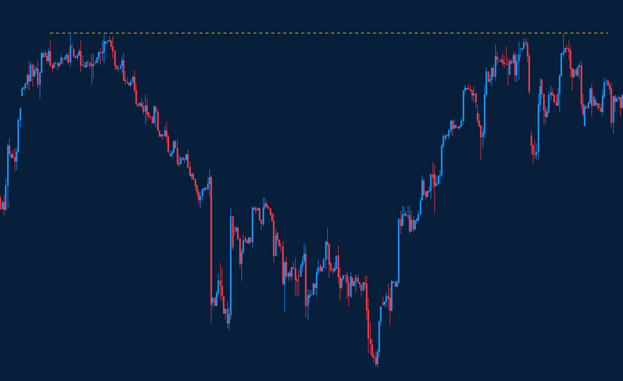
The Dow recently hit firm resistances on multiple occasions just above the 45K level
With forex trading, if the price creeps up to a key resistance such as 1.1000 on the EURUSD pair, which has held a firm resistance in the past, there are certain factors to consider. If there is weakening momentum and the volume is fading, it’s a better plan to take profit as the level could reject at that price again. However, a trade shouldn’t just be blindly closed just because a price has touched a level. If there is strong volume, the level could break.
So, should volume be taken into consideration?
Another simple answer, yes. Volume is a key driver of price action, revealing the strength and conviction behind a move, validating patterns, and helping identify reversals. Ignoring it can lead to false signals and more importantly poor exit levels.
There are many volume indicators in the market that can assist with trading. The most common signals that volume can indicate are strong up and downtrends, possible bounces and retracements and false breakouts.
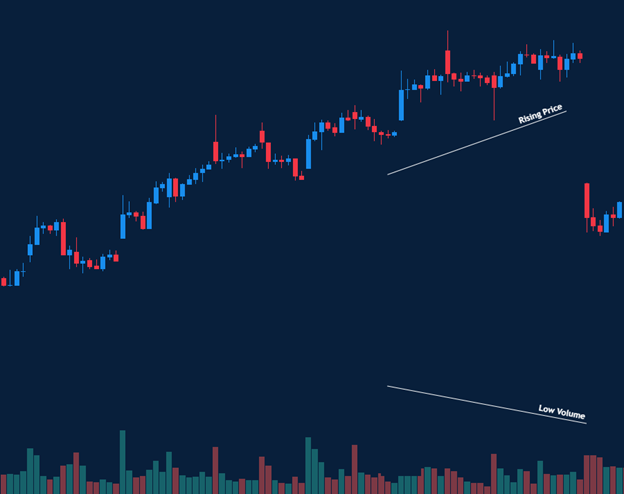
Tesla saw a rally come to a halt due to low volume which failed to propel prices
For example, if there is a strong price rise but falling volume, it could mean a weak rally with a possible reversal. With this example, it would be wise to exit the trade and lock in profits. On the flip side, rising prices and rising volume usually mean a strong uptrend, so the exit position can be delayed, leading to a larger potential profit.
The key takeaway from trading with volume is that price action reveals what is happening on the chart, while volume shows the trader how strong the move is.
Exiting the trade
In summary, monitoring the underlying market conditions and a solid trading style gives the trader more chance of making informed decisions to exit trades at the right time. All trading carries inherent risks so it is essential to have the correct understanding of the strategy.
Closing a trade based on logic rather than emotion is also a key takeaway. By sticking to a strategy based on the portfolio, you can benefit from the emotional rollercoaster that many traders experience.
Combined with volume signals and a profit target, finding the right exit point won’t seem like such an overwhelming task when trading.


![Credit Card 160×600 [EN]](https://assets.iorbex.com/blog/wp-content/uploads/2023/06/13144507/Blog-Banner_EN-Banner_160X600X2.webp)


