


Political events can take on many forms, each with the potential to influence global markets differently. Understanding the types of political events that affect values across the board is crucial for traders seeking to manage risk and focus on making profits.
Market opportunities do not come around every day, so when prices are in a period of uncertainty, markets, especially currencies, are significantly impacted.
The intricate relationship between currency values and political events can lead to sudden and extreme moves in price action, as trader sentiment and confidence are heavily influenced.
So, let’s delve deeper into safely trading in politically uncertain markets.

Is it all about forex?
It’s no secret that the Forex Exchange market is the largest and most liquid financial market in the world. So, for every fundamental action, there is a reaction. Forex pairs are highly sensitive and most directly affected by politics. Trade policies, sanctions, and central bank decisions all push currencies higher or lower.
When global sentiment is affected, currencies are usually the first to react. Let’s take the 2020 Pandemic as an example. Despite the massive sell-off in markets, the Japanese Yen appreciated against its main competitors, mainly due to its status as a safe-haven currency.
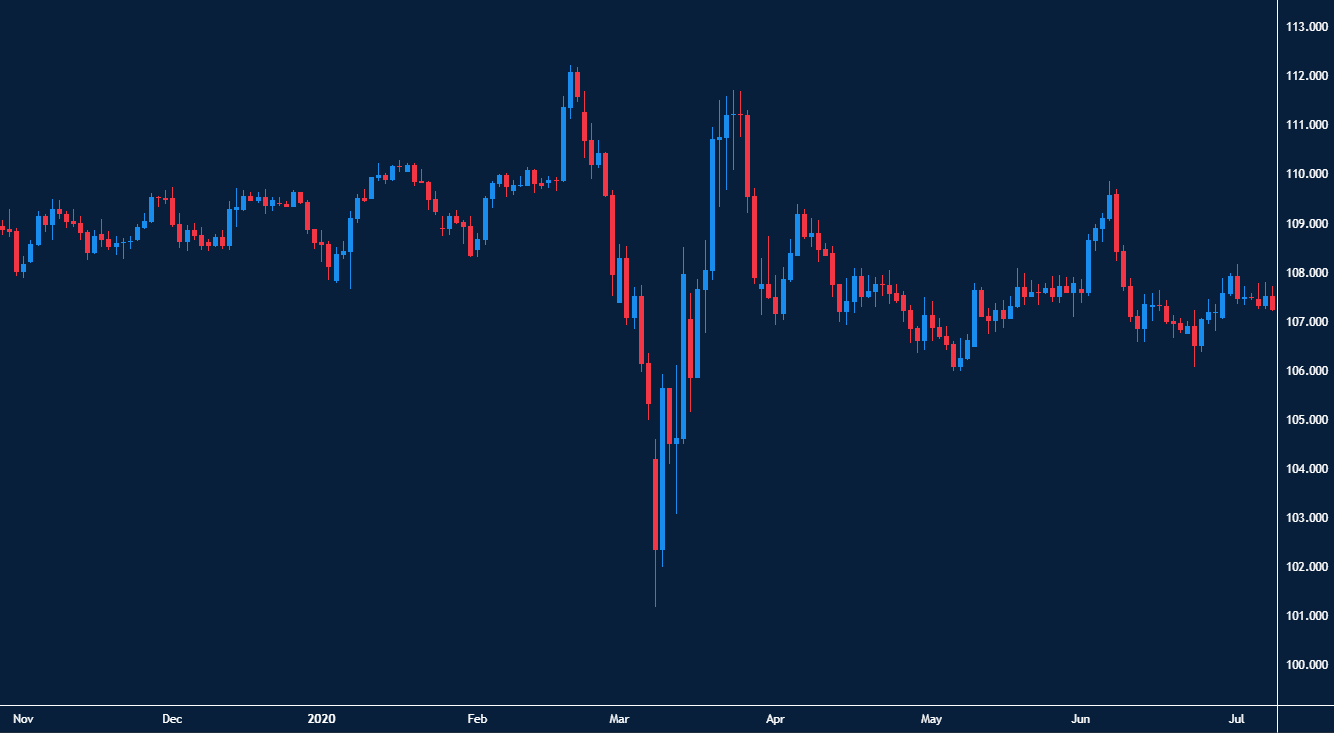
At the start of the pandemic, USDJPY moved over 1000 pips against the dollar before reversing
Are other markets affected?
Stocks can also be highly sensitive, with sectors such as banking, energy, and tech affected. When Donald Trump won the 2024 Presidential Election, stocks jumped higher with his promises of corporate tax cuts and deregulation.
So, can a strategy be created?
Political events often bring heightened volatility and uncertainty, making it crucial for traders to have well-defined strategies to capitalise on opportunities. Like all types of trading, there are pros and cons that depend on the trader’s appetite.
Around political events, there is higher volatility, unclear fundamentals and liquidity risks. But this doesn’t mean that it’s all negative. These markets are tradeable with the correct discipline and by staying informed and monitoring political developments.
Focusing less on exposed assets to political risk is favourable to a portfolio, as well as using wider pending orders to counteract slippage.
Volatility favours specific strategies, and long-term investors can benefit by reducing position sizes.
So, it’s long-term vs short-term?
Not necessarily, but it is something to think about. The short-term fundamentals often trigger immediate reactions, whereas the long-term impact could be just as beneficial.
At the time Brexit was voted in, Cable’s value dropped over 2000 pips in a few short sessions. However, over the following year, the pound almost reversed most of its losses, signalling a shift in long-term sentiment.
Whilst the initial announcement led to major declines, the long-term impact led to sustained changes and economic adjustments that influenced prices to bounce back.
What are the main drivers?
Elections are usually at the top of the list with regard to market impact. The uncertainty around election outcomes leads to increased volatility as speculation grows. In addition, policy announcements and economic reforms in international relations can shift sentiment and, in turn, shake up demand for a nation’s currency.
As we have seen over the past few years, geopolitical tensions and conflicts have a heavy say in the direction of a particular market. As previously stated, the Japanese Yen as well as the Swiss Franc are usually traded for their safe-haven appeal.
Disputes to trade and tariffs also have a profound impact. As we saw in 2025, the enforcement of tariffs and retaliatory measures between America and China led to a massive depreciation of the dollar.
Bottom Line
Politically uncertain markets can punish overconfidence but reward discipline. There are two sides to the story when markets shift as opportunities are available, whether the market is moving higher or lower.
But no matter what the outcome, staying informed and adaptable to any situation will be key to achieving success in trading during politically uncertain markets.


![Credit Card 160×600 [EN]](https://assets.iorbex.com/blog/wp-content/uploads/2023/06/13144507/Blog-Banner_EN-Banner_160X600X2.webp)


