Stop Spraying Bullets: The Sniper Framework for Institutional Trade Execution

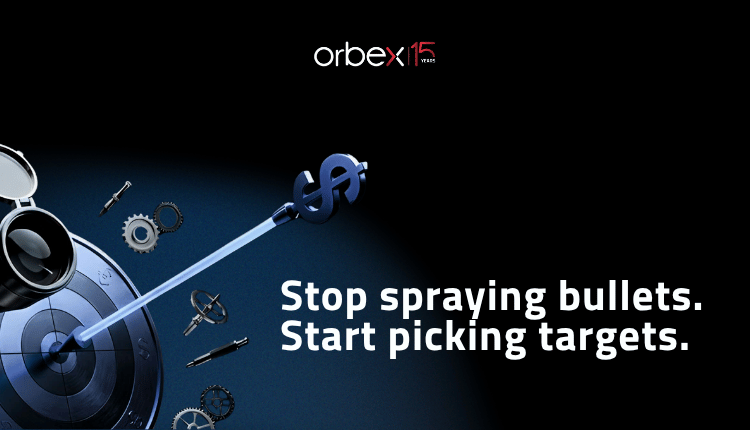
There is a fatal misconception in the retail trading ecosystem: the belief that screen time equals profitability. Amateurs assume that to be a “full-time trader,” you must be actively in a position from the opening bell to the close.
This is the fastest route to a blown account.
The most elite, highly profitable operators in the market do not trade every hour. They operate like snipers, practicing Sniper trading. They stalk the market, wait out the noise, and only execute when the mathematical probability is overwhelmingly in their favor.
Here is the operational breakdown of why patience is your ultimate competitive advantage, and how to define the strict criteria required to protect your capital from the noise.

Part I: The Cost of Noise
The market is designed to constantly bait you into suboptimal decisions. When you lower your standards and start taking “C-grade” setups just to feel active, you incur two massive costs.
-
Financial Variance: Every time you enter the market, you expose your capital to random probability. By taking mediocre setups, you are absorbing unnecessary risk without the asymmetric reward required to justify it.
-
Mental Capital Drain: Your psychological equity is finite. A losing streak born from bad, impulsive trades will cloud your judgment. When the actual, high-probability A+ setup finally appears, you will either be too scared to take it or lack the margin to execute it properly.
Overtrading is not hustle; it is boredom disguised as work. If you are trading to feel a rush, you are essentially paying the market an expensive entertainment fee.
Part II: The A+ Setup (The “Squint” Test)
You cannot treat the market like a casino. You must treat it like an ambush.
An A+ setup is not ambiguous. It does not require you to drop down to a 1-minute chart to hunt for a pattern that barely exists.
Apply the “Squint Test.” If you have to squint at the screen, draw ten different trendlines, and aggressively rationalize why the trade might work, the trade is not there. Walk away. The absolute best, institutional-grade setups jump off the screen—this is pure Sniper trading. The trend alignment is obvious, the liquidity sweep is clear, and the risk-to-reward ratio is mathematically undeniable.
Part III: Defining Your “Kill Criteria”
To eliminate overtrading, you must remove emotion from the execution process entirely. You do this by engineering a strict “Kill Criteria” checklist.
Before you ever unlock your broker terminal, you must have your parameters written down.
-
Is the macro trend aligned with my entry?
-
Has price reacted clearly off a high-timeframe key level?
-
Is there a structural shift in momentum for confirmation?
-
Is the risk-to-reward at least 1:3?
If your system requires five specific criteria to be met, and the current chart only offers four, you do not pull the trigger. Close the laptop.
Conclusion: The Discipline of Inaction
The hardest skill to master in the financial markets is not technical analysis. It is the discipline of sitting on your hands.
Amateurs want to spray bullets in every direction, hoping to hit a target. Professionals know that capital preservation is the first rule of survival. Define your setups, wait for the market to come to your exact levels, and execute without hesitation when the criteria are met.
Trading is 90% waiting and 10% execution. Master the waiting, and the execution will pay for itself.
Level up your trading skills and master the markets
Level up your trading skills and master the markets