


EURUSD Drops as ECB kicks off QE purchases
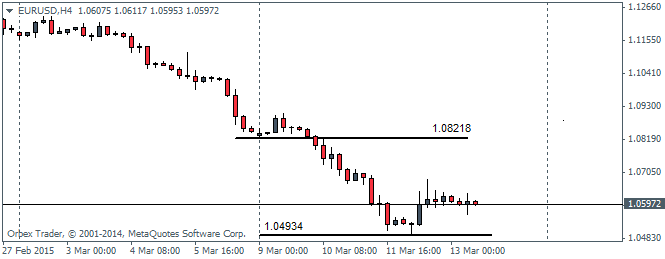
There was no stopping the declines in EURUSD as the currency collapsed from last week’s low at 1.08218 and promptly declined to reach a weekly low to 1.0493. The ECB started purchasing and announcing its QE bond purchases since the 9th of March when the QE purchases officially started. One might have thought that with the QE priced in so much into the Euro, the single currency would temporarily pause the declines but were proven wrong. With the Greenback poised to remain strong on the backdrop of a robust February jobs reports and the markets expecting a hawkish FOMC meeting next week, the Euro looks pressured to the downside with talks of reaching parity becoming an achievable target, sooner than later. Economic data was mostly upbeat but was ignored by the currency.
- Eurozone Sentix investor confidence 18.6 vs. 15.3
- France industrial production m/m 0.4% vs. -0.2%
- Italy industrial production m/m -0.7% vs. 0.2%
- Germany final CPI m/m 0.9% vs. 0.9%
- France CPI m/m 0.7% vs. 0.6%
- Eurozone industrial production m/m -0.1% vs. 0.3%
Sterling back below 1.50 handle
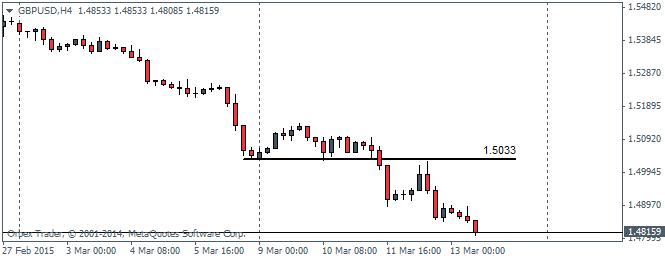
GBPUSD broke down from last week’s low of 1.5033 to decline back to the lows of 1.481 levels. The Sterling’s collapse was triggered on a broader strength in the Greenback, but the decline was widely expected as the Cable could stay subdued until the UK general elections are held in May. Economic data from the UK was broadly weaker with industrial and manufacturing production declining across the board.
- Manufacturing production m/m -0.5% vs. 0.2%
- Industrial production m/m -0.1% vs. 0.2%
- NIESR GDP estimate 0.6%
- Construction output m/m -2.6% vs. 1.4%
Australia posts better than expected jobs report
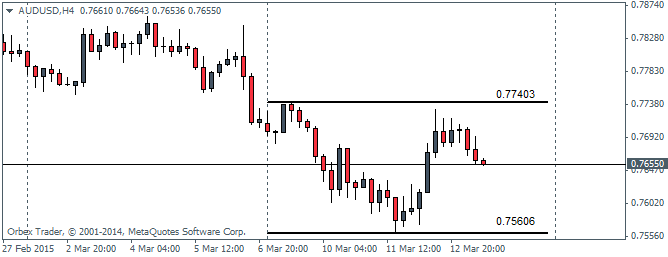
The Australia dollar set an initial weekly high to 0.774 but failed to break higher despite a better than expected jobs report as the markets continue to focus on the RBA’s next policy move. With expectations looking for a further decline in Australia’s interest rates, the Aussie failed to capitalize on the better than expected jobs report this week. A break below the weekly low of 0.756 could spell further losses for the Aussie.
- ANZ Job advertisements m/m 0.9%
- Westpac Consumer sentiment -1.2%
- Home loans m/m -3.5% vs. -1.9%
- MI inflation expectations 3.2%
- Employment change 15.6k vs. 15.3k
- Unemployment rate 6.3% vs. 6.4%
Japanese Yen trading mixed
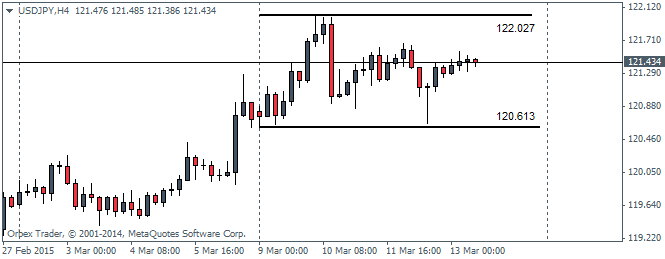
The week started off with the final GDP which dipped below expectations of 0.5% to 0.4% and down from 0.6% previously. But overall economic data from Japan were largely positive. The Yen was mixed against the Greenback but was considerably stronger against other currencies including the Kiwi and the British Sterling. The currency is likely to remain range bound ahead of next week’s BoJ monetary policy meeting where expectations call for the Central Bank to keep the policy unchanged.
- Final GDP q/q 0.4% vs. 0.5%
- Final GDP price index y/y 2.4% vs. 2.3%
- Economy watchers sentiment 50.1 vs. 46.7
- Prelim machinery tools orders m/m 28.9% vs. 20.4% previously
- Core machinery orders m/m -1.7% vs. -3.9%
- PPI y/y 0.5% vs. 0.5%
- Consumer confidence 40.7 vs. 39.9
RBNZ stands pat on policy
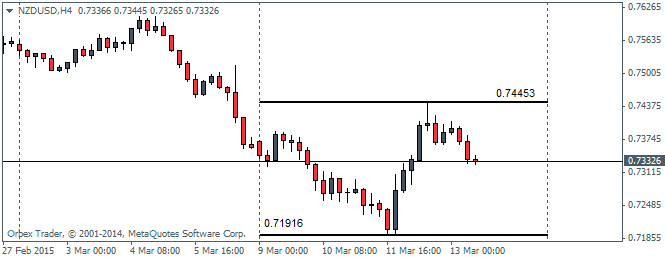
The RBNZ left interest rates unchanged at 3.5% and signaled a period of stability in monetary policy. The Central bank however reiterated the high exchange rate for the Kiwi Dollar but noted that any policy action would be dealt with on a monthly basis. The Kiwi understandably rallied to set a weekly high to 0.74453 but soon eased back lower against the Greenback. The longer term outlook for the Kiwi remains bearish.
- RBNZ official cash rate 3.5%, unchanged
- FPI m/m -0.7% vs. 1.3% previously
- REINZ Housing price index m/m 0.8% vs. -1% previously
- Business manufacturing 55.9 vs. 50.7 previously
US Dollar index briefly touches 100
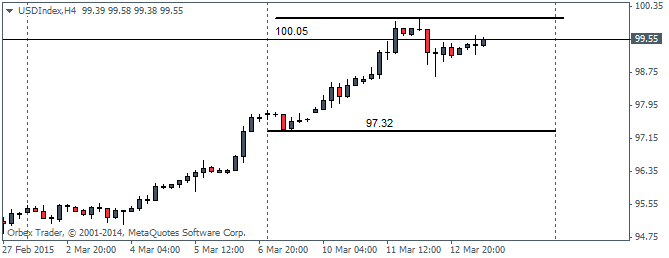
The Greenback gained momentum this week as the Dollar Index briefly touched to 100.05. Although economic data was mostly to the downside with retail sales declining, the Greenback was purely focused on the Fed’s interest rate hike ahead of next week’s FOMC event.
- NFIB small business index 98 vs. 99.2
- Wholesale inventories m/m 0.3% vs. 0%
- Core retail sales m/m -0.1% vs. 0.6%; retail sales m/m -0.6% vs. 0.3%
- Unemployment claims 289k vs. 306k
- Import prices m/m 0.4% vs. 0.2%
- Business inventories 0% vs. 0.2%
- PPI m/m -0.5% vs. 0.2%; Core PPI m/m -0.5% vs. 0.1%